The history of Dyson
Dyson is a well-known and respected British manufacturer of household appliances. This company, which is almost three decades old, is best known for its impressive line of vacuum cleaners. It also produces hand and hair dryers, heaters and more. The company was founded by James Dyson, who to this day is still the sole owner.
How it all began
Dyson started working on a prototype of a vacuum cleaner in 1979. The reason he focused his attention and time on vacuum cleaners was that the vacuum cleaner he used at home didn’t work as promised. Instead of sucking up the dust and keeping it inside the vacuum, it blew a large amount of dust back into the room every time. Dyson vacuum cleaners are based on the cyclonic separator technique used to remove dust from the air in industrial sawmills. The basic idea was to develop a bagless vacuum cleaner that would not lose suction during cleaning.
During his years at the Royal College of Art, Dyson met British inventor and engineer Jeremy Fry. It was Fry who provided almost half of the investment needed to develop the cyclonic vacuum prototypes. Over the next five years, he built and tested thousands of prototypes. Finally, in 1984 Dyson signed a licensing agreement with a consumer goods manufacturer in the United States. The deal did not work out and shortly afterwards Amway launched a vacuum cleaner that looked a little too much like Dyson’s designs. Dyson filed a lawsuit against Amway for patent infringement. The case was eventually settled in 1991. As part of the settlement, Dyson and Amway became joint license holders of the product, which continued to be sold.
In 1985, Dyson signed a lucrative licensing agreement with a Japanese company called Apex Ltd. This deal proved fruitful, and the revenue from it was used to set up Dyson Appliances Ltd. in 1991.
The first Dyson household appliances
The first Dyson vacuum cleaner with the patented cyclone technology was called the DA 001. Interestingly, it was manufactured by an American company called Philips Plastics and production took place in Wrexham, Wales. But this did not last long and at the beginning of 1993 Dyson set up its own production facility in Chippenham, Wiltshire, England. The next and probably most recognisable and marketable iteration of Dyson’s cyclone-based vacuum was the DC01. It stood out from other vacuum cleaners on the market because of the transparent bin that let you see all the dust that had accumulated.
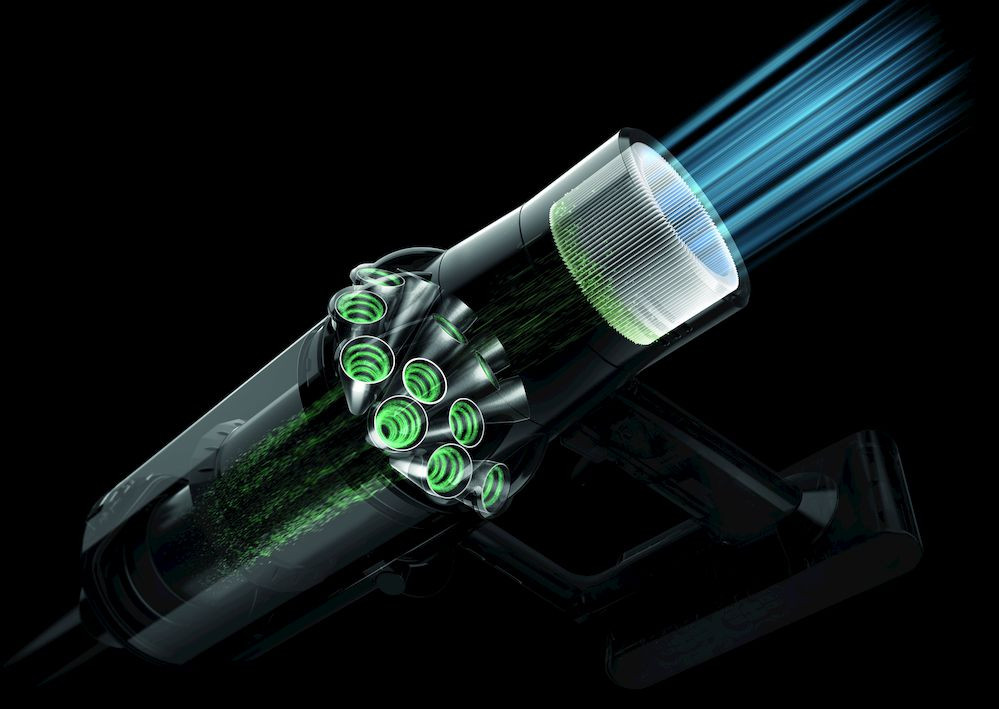
Until 2001, Fantom Technologies sold Dyson products in North America as a licensee, after which Dyson started selling independently. In the same year, Dyson launched a vacuum cleaner with improved technology. This model had seven cyclone cones instead of the dual cyclone-cone technology used in previous models.
Dyson moves production to Malaysia and Singapore
In 2002, Dyson moved its vacuum cleaner production to Malaysia. At the time, this move was heavily criticised, especially by the unions in Wiltshire (where production had taken place until then), who complained about potential job losses. A year later, Dyson also moved its washing machine production to Malaysia.
In 2004, Dyson signed a joint venture with Meiban Group, based in Singapore. Following the joint venture, the newly formed entity set up a factory in Johor, Malaysia. About ten years later, in 2013, Dyson also established a production facility in Tuas, Singapore, specifically for making digital motors.
Various patent and copyright infringements
Over the years, besides the Amway case, Dyson has faced a number of patent and copyright infringement cases. In 2000, Hoover, one of the largest vacuum cleaner manufacturers, was found guilty of patent infringement. Hoover’s Triple Vortex bagless vacuum cleaner turned out to have copied Dyson’s patented cyclone technology. Ultimately, in 2002, Hoover had to pay Dyson $ 4.2 million in damages for this flagrant infringement.
In 2006, a vacuum parts maker, Qualtex, was found guilty of copying some of Dyson’s design rights in order to manufacture and sell its vacuum parts. Qualtex had outsourced production to a Chinese company, which turned out to have carried out the copying.
In 2010, Dyson sued a rival company called Vax for copying its design to develop its Mach Zen vacuum. On this occasion, however, the court ruled against Dyson.
Dyson sued Samsung in 2013 for copying its vacuum steering technology, which allows the vacuum to move smoothly and intuitively behind the user rather than being dragged around. In this case, however, Dyson withdrew the lawsuit for unknown reasons.
James Dyson Foundation
The James Dyson Foundation was established in 2002, primarily to encourage young people to study engineering, but it also supports medical and other scientific research. The Foundation supports the local community in Malmesbury, where Dyson is now headquartered.
To encourage engineering studies, the Foundation provides schools with free resources to develop engineering curricula that emphasise engagement and hands-on learning. It also runs workshops where students get the chance to turn their ideas into tangible working models. As part of its medical initiatives, the Foundation set up the Dyson Centre for Neonatal Care. The Royal United Hospital initiated the construction of this centre, for which £ 750,000 was donated. A further £ 4 million was donated to the Royal United Hospital’s Cancer Centre. The Foundation has also donated money for other medical research, including Alzheimer’s research.
For the local community in Malmesbury, it has donated money to charities and supports schools and projects. It also supports the Malmesbury Carnival. The Foundation’s activities are not limited to the United Kingdom. It expanded into the United States in 2011 and into Japan in 2016. In total, it has activities in 25 countries. They have also opened the Dyson Institute of Engineering and Technology. On top of all this, there is the James Dyson Award. This is a prize specially for design and engineering students and recent graduates. It is awarded every year and is open to students in 27 countries.
What are the most popular Dyson models?
Of course, Dyson is best known for its vacuum cleaners, but in other household categories Dyson is also often an innovative game changer, whether through its futuristic design or through technical ingenuity. For instance, there are now Dyson humidifiers for sale, Dyson air purifiers and Dyson fans.
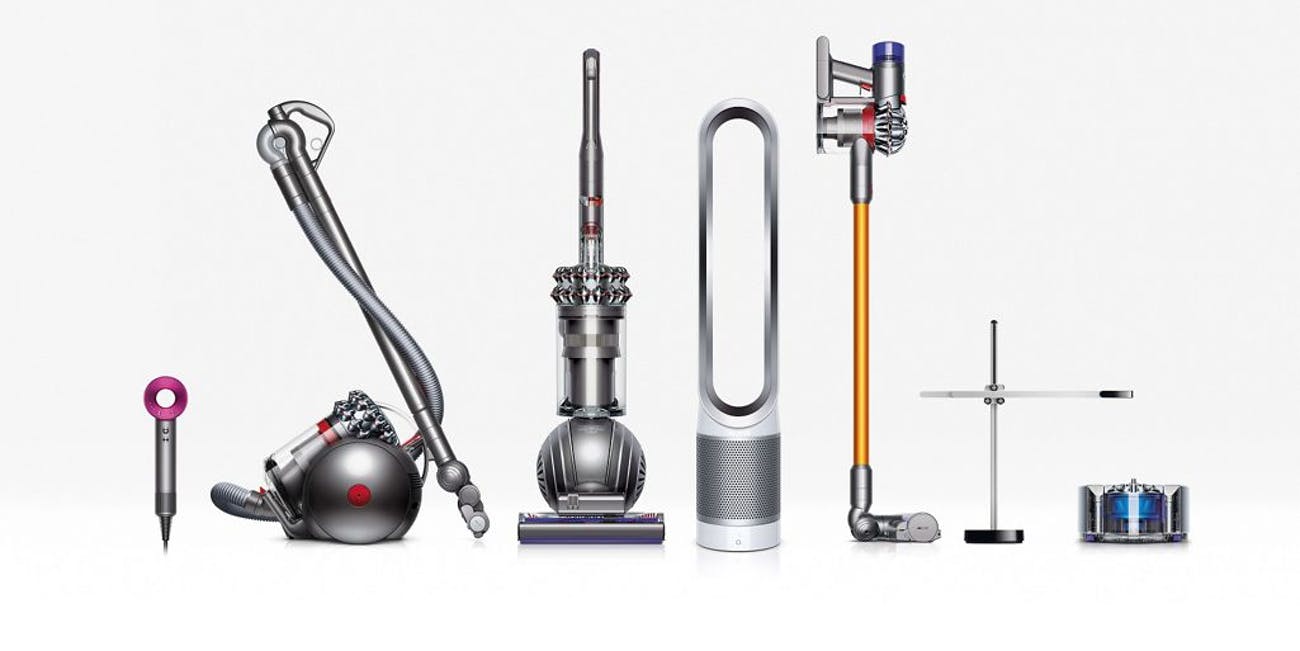
Some of the most popular Dyson products:
Dyson V11 Absolute cordless vacuum cleaner
Dyson V10 Cyclone stick vacuum cleaner
Dyson V8 Animal cordless vacuum cleaner
Dyson Big Ball Multi vacuum cleaner
Dyson V7 Trigger handheld vacuum
Dyson V7 Motorhead (cheapest stick vacuum model)
Which Dyson cordless vacuum cleaner model is the most recently introduced?
As described, there are a large number of Dyson cordless vacuum cleaners. The latest model from 2019 is the Dyson V11 vacuum cleaner. This Dyson V11 can handle any type of surface (including long-pile carpets and rugs) and is even more powerful than its predecessors. Dyson’s engineers have redesigned the motor. The motor still spins at an astonishing 125,000 rpm, but they have introduced a triple diffuser and made the rotating blades longer, thinner and with a slightly different S-shape. These changes are intended to improve airflow efficiency, increase suction power and reduce noise. Dyson claims they give it 20 percent more suction than the V10.
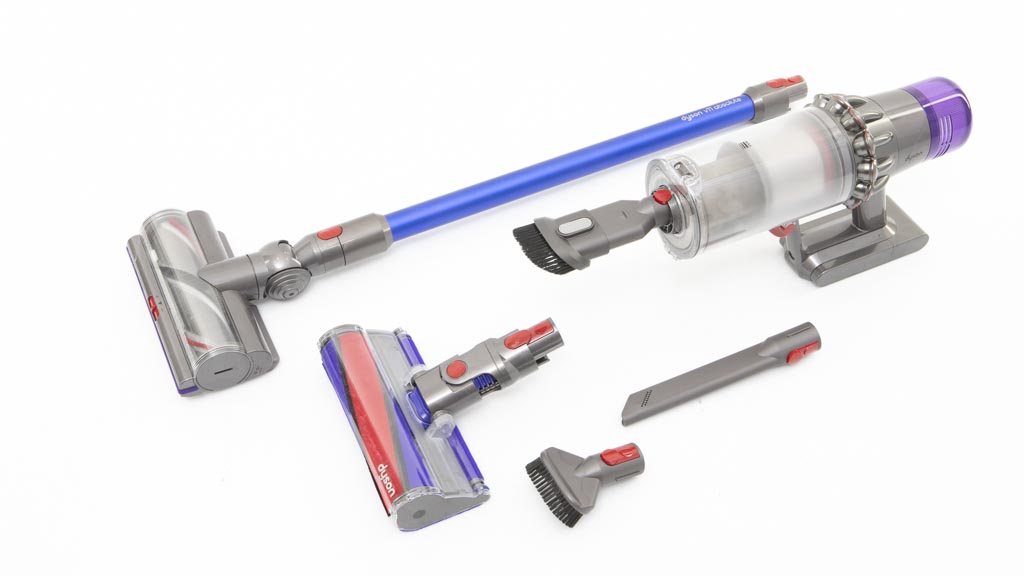
The noise level is around 80 decibels (dB) in Boost mode on carpet, which is loud but not unusual (most alarm clocks sound around 80 dB). It drops to 70 dB in Eco mode on carpet. The V11 also has an LCD screen. It is located at the top of the vacuum and lets you switch between Eco, Auto and Boost mode. With the battery in Eco mode, you can vacuum for about an hour; in Boost, I found that a full battery normally gives me 10 to 12 minutes of runtime, or enough time to clean a room or a couple of rugs.
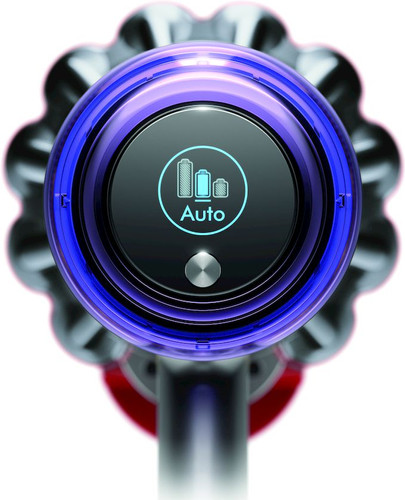
The V11’s cleaner head also has a Dynamic Load Sensor (DLS). Dyson says the DLS checks the resistance on the brush bar about 360 times per second and passes this information to both the motor and the battery’s microprocessors to calibrate suction and estimate battery life. It is incredibly sensitive and effective. It was fun to vacuum my carpet and see the screen switch between battery times and suction levels. In short, if you’re looking for a cordless vacuum cleaner, the Dyson V11 is highly recommended. It may not be the cheapest – the V11 costs around € 599 – but you can be confident you have the Rolls-Royce of vacuum cleaners.
Read the article “What is the difference between the Dyson V8, the Dyson V10 and the Dyson V11 cordless vacuum cleaner?”, compare them and buy the vacuum cleaner that best fits your home and needs.

Write a reply
Related Posts
Stripchat complete guide 2026 – the ultimate handbook for new users, reviews, tips, safety & costs
1. What is Stripchat? Stripchat is an international live entertainment platform focused on interact ...
What’s the difference between the Dyson V8, Dyson V10 and Dyson V11 cordless vacuum?
Dyson has long been the king of the cordless vacuum cleaner, really ever since the DC16 was launched ...
Top 10 best vacuum cleaners of 2024
Everyone needs a vacuum cleaner at home, whether you live in a big or small place. A vacuum cleaner ...

Gardena Sileno models: City, Life and Sileno+ differences
Gardena was founded in 1961 in Ulm (Germany) and is part of Husqvarna Group. Since then, the brand h ...