What’s the difference between the Dyson V8, Dyson V10 and Dyson V11 cordless vacuum?
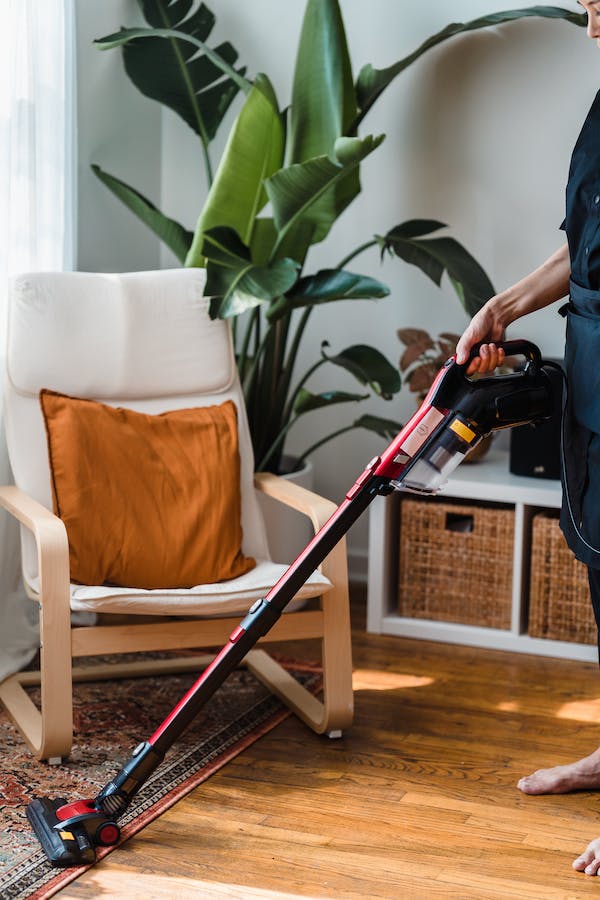
Dyson has long been the king of the cordless vacuum cleaner, really ever since the DC16 was launched in 2006. The history of Dyson is marked by innovation and design. The DC16 was noisy, had a very narrow cleaning head and the 6‑minute runtime meant it was impossible to use as the only main vacuum cleaner in the house.
Fortunately, cordless vacuums have improved dramatically over the years, with Dyson leading the way in innovative technology. In this article we look at the three most recent cordless vacuums in the Dyson family: the V8, V10 and V11. Read on as we compare all the features and benefits in this Dyson V8 vs V10 vs V11 guide.
Go straight to the price at bol:
Dyson V8: the most affordable of the three. The current V8 Cyclone lasts up to 60 minutes.
View the Dyson V8 at bol ›
Dyson V10: best value for money, up to 60 minutes and a larger dust bin.
View the Dyson V10 at bol ›
Dyson V11: the most powerful of the three, with a display.
View the Dyson V11 at bol ›
Note: there are now newer models as well, such as the Dyson V12 Detect Slim and the Dyson V15 Detect. You can see all Dyson models side by side on stofzuigervergelijk.com.
| Comparison Dyson V8 vs V10 vs V11 | Dyson V11 cordless | Dyson V10 cordless | Dyson V8 cordless |
| Battery life | 60 minutes | 60 minutes | 40 minutes |
| Charging time | 4.5 hours | 3.5 hours | 5 hours |
| Weight | 2.97 kg | 2.68 kg | 2.61 kg |
| Bin volume | 0.76 litres | 0.76 litres | 0.54 litres |
| Brush types | Torque drive | Direct drive | Direct drive |
| Prices | View price | View price | View price |
Dyson V8 specifications and features
Dyson launched the V8 cordless vacuum in 2016 as an improved version of the V6. It has a runtime of 40 minutes, which is double that of the V6. It also has a larger dust capacity, more powerful suction and quieter operation. Even after the release of the V10 and V11, the Dyson V8 is still an excellent vacuum that can handle all your cleaning needs. It works just as well on carpet as on hard floors and comes with a wide range of attachments so you can clean hard‑to‑reach areas such as stairs, ceilings and under low furniture.
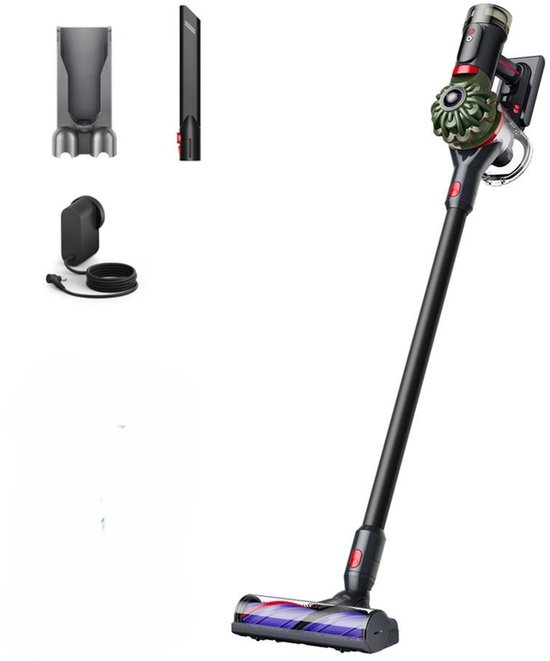
The Dyson V8 is also cheaper than the later models, so it’s a great choice if you want Dyson power and performance at an affordable price.
Check the current price of the Dyson V8 at bol ›
Dyson V10 specifications and features
When the V10 was released in 2018, Dyson announced that they would no longer produce new corded vacuums and would instead put all their resources into their cordless range. That decision seems to have paid off, with the V10 being a big step up from its predecessor. To start with, battery life is 50% longer than the V8, giving you about 60 minutes of vacuuming time on a full charge. There are three different power settings on the V10: you get 60 minutes of cleaning time on the low setting, 30 minutes on the medium setting, while the MAX setting only gives you around 10 minutes. The MAX setting delivers a hefty 151 Air Watts of power and should only be used for very heavy cleaning jobs. Runtime goes down when the motorised cleaning head is attached.
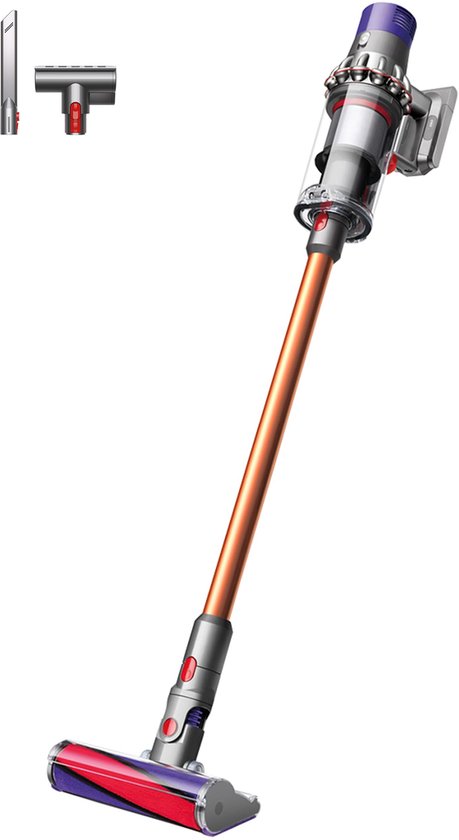
Other improvements include a larger dust bin, a washable HEPA filter and a streamlined design that delivers better suction. Since the launch of the V11, the price of the V10 has dropped, so it’s a good time to get Dyson’s power and technology at a more affordable price.
Check the current price of the Dyson V10 at bol ›
Dyson V11 specifications and features
The Dyson V11 was released in March 2019 and is the most powerful cordless vacuum Dyson has ever produced. It’s not a cheap model, but the range of features and improvements over earlier models more than justify the cost.
The main difference in the V11 compared to the V10 and V8 is the addition of an LCD screen on the top of the vacuum. The screen shows a countdown timer of the remaining battery life and tells you which power mode is selected. Perhaps the most useful feature of the LCD screen is that it tells you if there are any issues with the V11 vacuum, such as a filter that needs cleaning or a blockage. The screen even plays a handy little video showing you how to fix the problem.

Another upgrade is the Torque Drive cleaning head, which has sensors to monitor the resistance of the brush bar. This works together with the power management system to detect what type of surface you’re cleaning, resulting in more efficient cleaning and less battery waste.
The Dyson V11 is the most technologically advanced cordless vacuum on the market, with a price tag to match. If you want maximum value for money, this really is the best cordless vacuum available and, if the price feels like a hurdle, you can see the V11 more as a long‑term investment. All Dyson cordless stick vacuums come with a 2‑year warranty that can be extended to 5 years, giving you plenty of peace of mind to take the plunge.
Which Dyson V8, V10 and V11 types and models are available?
V8: Total Clean, Absolute or Animal
The Dyson V8 is available in three different models – Total Clean, Absolute and Animal. They all come with similar tools and attachments, but there are a few differences you should be aware of. All three models come with the following tools and accessories: direct drive cleaner head, quick‑release mini motorhead tool, combination tool, crevice tool, docking station and charger.
The Animal version is best for homes with pets, although this model has the fewest extras. It doesn’t include the soft roller cleaner head, although you can buy this separately if you want. The soft roller head is included with the Total Clean and Absolute models. The Absolute and Animal models come with the quick‑release mini soft dusting brush, while the Total Clean does not. However, the Total Clean comes with the quick‑release up‑top adapter, quick‑release flexi crevice tool and a handy tool bag to store all your attachments. All Dyson tools and attachments can be purchased separately.
V10: Total Clean, Absolute or Animal
The Dyson V10 is also available in three different models – Total Clean, Absolute and Animal. They come with similar tools to their V8 counterparts, but there are a few differences we’ll highlight. All three of these Dyson V10 models come with the following tools and accessories: direct drive cleaner head, motorised tool, combination tool, crevice tool, docking station and charger.
The Animal version is best for homes with pets and, again, this is the model with the fewest extra tools. The Animal does not come with the soft roller cleaner head used by the Total Clean and Absolute, but you can buy it directly from Dyson if needed.
The Absolute and Animal models come with the quick‑release mini soft dusting brush, while the Total Clean version does not. The Total Clean comes with three extra tools that the Animal and Absolute models don’t have: the quick‑release wide nozzle tool, the quick‑release up‑top adapter and the quick‑release extension hose.
All Dyson tools and accessories can be purchased separately.
V11: Absolute or Animal
The Dyson V11 is available in two models: Absolute and Animal. There is no Total Clean version of the V11, although it may be released in future. The two models come with similar tools and accessories, with the only difference being the main cleaner heads.
The Absolute and Animal models both come with the following tools and accessories:
- motorised tool,
- combination tool,
- crevice tool,
- quick‑release mini soft dusting brush,
- wand clip,
- docking station and charger.
The V11 Animal comes with the direct drive cleaner head, while the V11 Absolute comes with the Torque Drive motor head and the soft roller cleaner head.
Again, all tools and accessories can be bought separately. The Dyson V11 Absolute also comes in a choice of two colours – the traditional nickel/blue or a new gold finish.
Dyson V8 vs V10 vs V11: the design
The design of all three vacuums is fairly similar and they’re all about the same size. The V8 is the lightest and the V11 is the heaviest, but we’re only talking about a difference of a few hundred grams.
The main design difference between the V8 and the later models is that the dust bin on the V8 sticks out at a right angle to the vacuum. On the V10 and V11 the bin is streamlined and positioned vertically along the wand. This allows for a larger bin and also helps boost suction and power thanks to improved airflow.
All three vacuums have a trigger to operate them, which is a great feature for saving battery life. As soon as you release the trigger, the vacuum stops, which is handy when you’re moving between rooms or going up and down stairs.
The Dyson V8, V10 and V11 all have a quick‑release system that makes it easier and faster to switch between tools and accessories. Earlier Dyson cordless sticks, such as the Dyson V6, don’t have this feature.
Dyson V8 vs V10 vs V11: Size and weight
There isn’t much difference in the size and weight of each Dyson model. The V8 is the shortest at 1.24 metres and the V11 is the longest at 1.28 metres. The V10 measures 1.25 metres, so there’s only 40 millimetres between all three.
The weight of the three vacuums follows the same pattern. The V8 is the lightest at 2.61 kg, the V11 is the heaviest at 2.97 kg and the V10 sits in the middle at 2.68 kg. There’s less than half a kilo difference between all three models, which shouldn’t make a big difference while cleaning.
It makes sense that the V8 is the shortest and lightest and the V11 the longest and heaviest. Each new version packs in more technology, so an increase in size and weight is inevitable.
Dyson V8 vs V10 vs V11: Power and performance
Dyson’s cordless vacuums are powered by the Dyson digital motor, and each new version of the vacuum has its own motor. The Dyson digital motor V8 powers the V8, then there are the digital motor V10 and digital motor V11. Each new motor brings more power to the vacuum and, combined with better design and improved battery technology, every new model is a huge step up from the previous one.
For example, the Dyson V8 produces 115 Air Watts in MAX mode. This increases to 150 Air Watts in the Dyson V10 and 185 Air Watts in the Dyson V11. That’s a huge jump compared to the Dyson V6, which produces 100 Air Watts and is still a powerful vacuum in its own right.
To put that into context: the most powerful corded vacuum Dyson makes is the Dyson Light Ball, which produces 245 Air Watts. The fact that a cordless stick vacuum even comes close to that is a feat of engineering, and it probably won’t be long before Dyson releases a cordless model that’s even more powerful.
Dyson’s cyclonic technology sets it apart from competitors, with centrifugal force literally flinging dirt from the floor into the bin. The V8 has fifteen cyclones arranged in two tiers, while the V10 and V11 have fourteen cyclones. The later models can make do with fewer cyclones thanks to the streamlined design and more powerful motor.
Dyson V8 vs V10 vs V11: Technology
All three of these cordless Dyson vacuums share the same core technology. The trigger switch is a feature they all have, along with whole‑machine HEPA filtration. They can all be converted into a handheld vacuum and the tools and accessories are easy to swap. The Dyson V10 has several improvements over the V8, such as a smaller yet longer‑lasting battery, three power modes instead of two and a streamlined design that improves efficiency and suction. It’s also easier to empty the bin with a simple point‑and‑shoot mechanism. Compared to the V8 and V10, the Dyson V11 is in a different league when it comes to technological advances. The new features are all designed to increase suction and extend battery life.
Dyson V11 LCD screen
One of the biggest and most obvious changes in the V11 is the addition of an LCD screen on top of the vacuum. While the V10 has a battery level indicator to warn you when the battery is almost empty, the V11’s screen goes a step further. There’s a countdown timer down to the second, so you know exactly how much time you have left. The timer changes depending on the selected power mode.
The screen also shows you which mode is selected. This is handy because you can sometimes change the power mode by accident and shorten battery life. Just like on the V10, there are 3 power modes on the V11. These have been renamed Eco, Medium and Boost, with Boost replacing MAX mode from earlier versions.
One of the best features of the new display is the fault reporting function. The V11 has a real‑time system performance monitor that actively checks system performance up to 8,000 times per second. If any problems are found, they’re shown on screen. This could be a blockage or a filter that needs replacing. The screen even shows a short video explaining how to fix the issue.
Torque Drive cleaner head
Two pieces of new technology in the V11 that work together are the Torque Drive cleaner head and the power management system. When the Torque head is attached, the Medium setting becomes Auto mode. When Auto is selected, sensors in the cleaner head monitor the resistance of the brush bar and adjust the power depending on the floor surface. It might sound complicated, but it simply means that when you clean carpet the vacuum automatically increases power, and when you move to a hard floor it reduces power. All this is designed to extend battery life and protect your floor surfaces.
Dyson V8 vs V10 vs V11: Battery life and charging time
The Dyson V8, V10 and V11 all use a rechargeable lithium‑ion battery. The battery in the V10 and V11 is a seven‑cell nickel‑cobalt‑aluminium battery, which is basically a higher‑performing, longer‑lasting lithium‑ion battery. James Dyson has said he expects the new batteries in the V10 and V11 to last up to fifteen years, while the battery in the V8 is designed to last around two years.
The battery cannot be removed from the vacuum and is charged by placing the vacuum in the charging dock. The dock can be wall‑mounted to save space and hidden away in a cupboard if you prefer. The Dyson V8 battery lasts up to 40 minutes in standard mode, dropping to 7 minutes in MAX mode. It takes 5 hours for the battery to fully recharge.
| Battery life | Dyson V11 cordless | Dyson V10 cordless | Dyson V8 cordless |
| Standard mode | 60 minutes | 60 minutes | 40 minutes |
| Max/Boost mode | 12 minutes | 8 minutes | 7 minutes |
| Charging time | 4.5 hours | 3.5 hours | 5 hours |
The V10 battery takes the least time to fully charge – just 3.5 hours, which is a big difference. You also get longer cleaning time: up to 60 minutes on Low mode, 30 minutes on Medium and around 8 minutes in MAX mode.
The V11 has similar runtimes to the V10. The battery gives you up to 60 minutes of cleaning in Eco mode, about 40 minutes in Medium mode and an improved 12 minutes in Boost mode. Cleaning time will vary if you use the V11 in Auto mode. Some users report more than 60 minutes of cleaning in Auto mode, likely thanks to the power management features. It takes 4.5 hours for the V11 to fully charge.
Dyson V8 vs V10 vs V11: Bin capacity
The dust capacity of the Dyson V8 is 0.54 litres, while both the V10 and V11 have an increased capacity of 0.76 litres. This increase is due to the more streamlined design of the later models. The different design also affects how the bins are emptied. To empty the V8, you pull the catch on top of the vacuum and slide the top of the cyclones upwards. This releases the bin flap so dust and debris can fall into the bin.
The V10 and V11 take a different approach when it comes to emptying the bin. All you have to do is hold the vacuum over the trash can, slide the latch on the side and the dirt will fall straight in. The sliding mechanism pushes the dirt towards the front of the bin, so you never have to pull out clumps of dust by hand.
Dyson V8 vs V10 vs V11: Filtration system
The Dyson V8, V10 and V11 all feature whole‑machine HEPA filtration, meaning they capture 99.97% of particles as small as 0.3 microns. This includes dust, pet dander and even cold and flu bacteria. All three vacuums also have a sealed filtration system, so no dirt or dust can leak back into the room. This is especially important if you or someone in your home suffers from allergies. Many vacuums actually make allergy symptoms worse because they blow dirty air back into the room.
The V8 has a central filter and a HEPA filter. Both are washable and designed to last the life of the machine. The V10 and V11 have a single HEPA filter that is also washable and will last for the full life of the vacuum.

Dyson V8 vs V10 vs V11: Which one should I buy?
In the end, the main factor in choosing between the Dyson V8, V10 or V11 will be price. All three of these cordless vacuums can easily be your main and only vacuum cleaner and will clean your home thoroughly.
The Dyson V11 is the best performer of the three. The power management features, LCD screen and Torque Drive cleaner head really set it apart. The technology in this vacuum is cutting‑edge but, more importantly, it genuinely helps you clean your home more efficiently. The Dyson V10 is a great choice if you want fairly recent technology but also want to save some money. At the time of writing, the V10 is more than € 100 cheaper than the V11. While you don’t get the very latest features, you still get up to 60 minutes of cleaning time, powerful suction and a range of features that the V8 doesn’t have.
The Dyson V8 doesn’t have the technology and features of the newer models and its runtime is shorter. But it still delivers that great Dyson suction, along with a full set of tools and accessories. The V8 is more than € 100 cheaper than the V10 and costs around half the price of the latest V11. That makes it a good option if you want to spend less on a quality vacuum.
- Want the lowest possible price? Choose the Dyson V8.
- Want the best value for money? Choose the Dyson V10.
- Want the most power and tech? Choose the Dyson V11.
Looking for something newer? The Dyson V12 Detect Slim is lighter and has a laser light that shows up dust, and the Dyson V15 Detect is even more powerful. On stofzuigervergelijk.com you can compare all Dyson models with the latest prices from bol.
This Dyson V8 vs V10 vs V11 overview should help you decide which model to pick. Whichever one you choose, you can be confident you’re getting a cordless vacuum that meets your needs and keeps your home clean.
Maybe you’re considering a Bosch stick vacuum instead? Read here about the differences between the Bosch Unlimited Serie 8 and the Dyson V8.
Write a reply
Related Posts
Stripchat complete guide 2026 – the ultimate handbook for new users, reviews, tips, safety & costs
1. What is Stripchat? Stripchat is an international live entertainment platform focused on interact ...
Top 10 best vacuum cleaners of 2024
Everyone needs a vacuum cleaner at home, whether you live in a big or small place. A vacuum cleaner ...

Gardena Sileno models: City, Life and Sileno+ differences
Gardena was founded in 1961 in Ulm (Germany) and is part of Husqvarna Group. Since then, the brand h ...
Which Roomba is best for you? Compare the top iRobot models.
You probably know someone who owns a Roomba iRobot or at least a robot vacuum. They’re incredibly ...