Should I buy winter tyres or not?
As the temperature drops, many drivers start wondering whether it’s worth investing in a set of winterbanden.
Winter tyres have been the subject of a lot of debate in recent years. First, a series of very cold winters made people sit up and start asking whether they should buy a set.
But the relatively mild winters in 2014 and 2015 (so far) had the opposite effect, with many people deciding winter tyres were a waste of money and wondering what all the fuss was about in the first place.
So what are the real facts about winter tyres, and is it worth owning a set in the Netherlands?
What is a winter tyre?
There are three main types of tyre you might consider using on the road. One is the summer tyre,which most drivers use and which you probably think of as a “normal” tyre.
Summer tyres have a relatively hard compound, which means they soften in milder temperatures to provide plenty of grip – usually at temperatures above 7°C. However, that makes them less effective once the temperature drops below that point, because they become too hard and can’t provide enough grip.
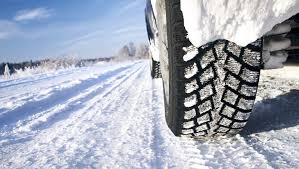
Winter tyres, more accurately called “cold-weather” tyres, have a snowflake symbol on the sidewall and are made from a softer compound. That means they stay soft enough to provide the grip you need at temperatures below 7°C. They also have a different tread pattern, with fine grooves or “sipes” cut into each tread block to bite into snow more effectively.
It’s worth pointing out that these tyres are different from studded tyres, which have plastic or metal studs embedded in the rubber, a bit like football boots. These are not legal for use on public roads.
Between winter and summer tyres there’s a third option: the all-season tyre. The aim of this tyre is to offer the best of both worlds; a harder compound than a winter tyre so it can be used in both cold and milder temperatures, but still with sipes to help give grip in snow and slush. These tyres are considered effective down to -5°C.
Which tyre is best for use in the Netherlands?
At first glance, the all-season tyre seems best suited to use in the Netherlands, as it’s designed for the kinds of temperatures we experience for most of the year.
The question of whether we really need winter tyres is the most hotly debated. It all comes down to how much of the winter you expect to spend driving in temperatures below 7°C. If you’re below that temperature for most of the winter, buying a separate set of winter tyres and switching them over every October and March is the ideal solution.
Otherwise, it may be better to stick with your summer tyres or buy a set of all-season tyres to use all year round.
So winter tyres aren’t just useful in snow and ice?
No. In fact, current research suggests winter tyres perform better than summer tyres whenever the temperature drops below 7°C. That means a car fitted with winter tyres should stop more quickly and be less prone to skidding in any weather conditions once the temperature is below this mark.
But buying an extra set of tyres is expensive, isn’t it?
Yes. Winter tyres are often slightly more expensive to buy than summer tyres, and having a complete extra set is quite an investment – especially if you combine them with an extra set of wheels to make swapping even easier, but also cheaper in the long run, because the garage has less work to do and can change them more quickly when the tyres are already mounted on rims.
You can find the Top 10 tyre providers here.
It’s worth remembering that although you pay for two sets of tyres, they also last twice as long; in other words, much of the extra cost of the winter set is offset by the fact that they take the strain off your summer set for half the year.
And as for the spare set of wheels, you can always sell them when it’s time to part with your car and recoup part of your costs.
But do winter tyres really work?
Yes. Winter tyres not only reduce stopping distances in snow and ice, but also in wet conditions below 7°C. What’s more, they improve cornering, allowing you to steer the car in situations where you might otherwise skid straight on.
But I’ve got four-wheel drive – I don’t need winter tyres, do I?
It’s certainly true that four-wheel drive gives better traction in snow and ice, meaning you can pull away more easily. However, it only offers limited extra help when you’re negotiating a bend, and none at all when you’re braking in a corner.
If you have a 4x4 and fit it with winter tyres, you’re giving yourself the best possible chance of coping with whatever winter weather comes your way.
Can’t I just buy a set of winter tyres and drive on them all year round?
Yes, you can, but we wouldn’t recommend it. Above 7°C, the softer compound has the same effect as running summer tyres in wintry conditions – in other words, longer stopping distances and a greater tendency to skid in corners.
On top of that, winter tyres wear down more quickly at higher temperatures, which means you’ll have to replace your tyres more often.
Can’t I just fit winter tyres to the two driven wheels of my car?
No. On a front-wheel-drive car you’ll find the rear wheels are more likely to skid, which could cause you to spin when you’re braking or driving downhill, while on a rear-wheel-drive car this could cause the car to skid straight on in corners or fail to stop in time. If you’re going to fit winter tyres, you need to fit them on all four wheels.
Also read the article “De noodzaak van winterbanden”.
Write a reply
Related Posts
Stripchat complete guide 2026 – the ultimate handbook for new users, reviews, tips, safety & costs
1. What is Stripchat? Stripchat is an international live entertainment platform focused on interact ...

What’s the difference between the Dyson V8, Dyson V10 and Dyson V11 cordless vacuum?
Dyson has long been the king of the cordless vacuum cleaner, really ever since the DC16 was launched ...

Top 10 best vacuum cleaners of 2024
Everyone needs a vacuum cleaner at home, whether you live in a big or small place. A vacuum cleaner ...

Gardena Sileno models: City, Life and Sileno+ differences
Gardena was founded in 1961 in Ulm (Germany) and is part of Husqvarna Group. Since then, the brand h ...