Scarifying and aerating your lawn: tips and experiences
Autumn is the best time to fertilise, aerate and/or scarify your lawn. Everything you do to improve the condition of the lawn in the three months leading up to winter is valuable. It will help get your lawn in better shape for the following spring!
When it comes to scarifying and seeding, there are plenty of questions, such as: When is the best time to scarify and seed? Should you aerate or scarify the lawn before you sow? What is the difference between aerating and scarifying?
To help you decide whether and when you want to sow, aerate or scarify, what type of fertiliser to use, and so on, we’ve put together the following tips based on experience.

What is scarifying and how does it work?
Scarifying is a technique used to keep your lawn healthy and attractive by removing unwanted organic material such as moss, dead grass and leaves. Scarifying also ensures that the grass roots can breathe better and absorb more nutrients.
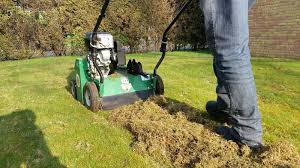
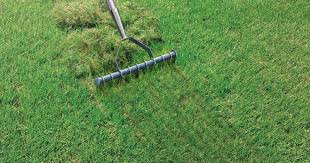
Scarifying is done with a special machine, called a scarifier, which uses small blades or blades with spring-like tines to pierce the soil and grass and pull out the dead material. This can be done manually with a scarifying rake, but a machine is often more efficient and less labour-intensive.
The machine is usually run over the lawn in different directions to make sure all areas are covered. After scarifying, the lawn may look bare and damaged, but this is normal and the grass will soon recover and thicken up again.

It’s important to fertilise and water the lawn after scarifying to help it recover and stay healthy. Scarifying is usually done in early spring or late autumn, when the grass is actively growing and there is less risk of drought or heat.
What is the difference between aerating and scarifying?
Aerating and scarifying are similar in that both prepare the lawn for seeding. However, they differ in several important ways. Read on to see when it makes sense to aerate and when it’s better to scarify.
How do you know if the lawn needs aerating?
Aerating removes small cores of soil from the lawn. A special machine digs out and pulls up small plugs from the lawn about the size of a cork. This loosens the soil and allows oxygen, water and nutrients to reach the underlying roots again.
In addition, the cores contain micro-organisms that break down thatch into healthy organic matter. Aeration results in looser soil, a stronger root structure and better results when overseeding.
How often and when should you aerate?
If you’re going to seed your lawn, it’s best to do this early in the season, such as in September, so the seed has maximum time to germinate.
Seed germination needs three things: contact with the soil, water and warmth.
If you’re just overseeding the lawn to make it a bit thicker and the lawn is generally in reasonable condition, then aeration is the best method. Try to overseed the garden within a day of aerating, while the holes are still open and before the cores start to break down.
When should you scarify the lawn?
If the lawn is thin, has bare patches or if the existing lawn needs to be killed because it’s the wrong type of grass or full of weeds, then it’s better to start again and scarifying is recommended.
Scarifying is done with a machine that cuts thin rows into the grass instead of removing plugs, as aeration does. Scarifying loosens the topsoil so the seed has better contact with the soil for germination.
Scarifying helps remove the layer of thatch that naturally builds up from mowing and leaf debris. Because scarifying is more aggressive, it’s recommended for lawns that need serious repair work or for completely replacing a lawn.
Scarifiers
With a scarifier you combat moss, weeds and thatch in your lawn. You also open up the soil to light and air. When choosing a scarifier, pay attention to the type of drive. Electric machines are convenient for small to medium-sized lawns. For a small lawn you can also use a manual model. Keep in mind that you’ll need to apply some force yourself in that case.
A scarifier is a garden machine used to aerate the lawn and remove dead plant material and moss. It usually has steel blades or tines that cut into the lawn and puncture the turf to aerate the roots and soil.
Using a scarifier can have several benefits for your lawn, such as improving air circulation and drainage, making the grass healthier and encouraging better growth. It can also help reduce weed growth and improve the appearance of your lawn.
However, it’s important to use the right technique when using a scarifier to avoid damaging the lawn. In general, it’s recommended to scarify the grass in spring or autumn, and not to do it too often, so the lawn has time to recover between sessions.

Once you’ve created a new and healthy lawn, it’s important to maintain it properly. You might also like our article on the top 10 best lawn mowers.
Write a reply
Related Posts
Stripchat complete guide 2026 – the ultimate handbook for new users, reviews, tips, safety & costs
1. What is Stripchat? Stripchat is an international live entertainment platform focused on interact ...
What’s the difference between the Dyson V8, Dyson V10 and Dyson V11 cordless vacuum?
Dyson has long been the king of the cordless vacuum cleaner, really ever since the DC16 was launched ...
Top 10 best vacuum cleaners of 2024
Everyone needs a vacuum cleaner at home, whether you live in a big or small place. A vacuum cleaner ...

Gardena Sileno models: City, Life and Sileno+ differences
Gardena was founded in 1961 in Ulm (Germany) and is part of Husqvarna Group. Since then, the brand h ...