Top 10 best home dehumidifiers
There is always moisture in the air, and that’s needed to make it feel comfortable. But when your home is too humid and you don’t take action, moisture problems will arise. Depending on the amount of moisture, this can lead to condensation on window frames, windows and walls, and even mould on furniture and walls. This excess moisture can also be the result of good home insulation, where moisture gets trapped because there isn’t enough ventilation.
A family produces an average of 11.5 litres of moisture per day. When this moisture can’t escape, it will start to build up somewhere in the house – usually at the coldest spot, because that’s where the moisture collects, with all the associated problems and consequences. It’s very important to keep the humidity level between 40% and a maximum of 65% relative humidity. This prevents these kinds of problems, musty odours and damage, including to your health. Especially for people with asthma and allergies, high humidity is very bothersome.
The solution to all this is simple, efficient and sustainable: a dehumidifier!
What causes high humidity?
As explained above, you don’t want excessive moisture in your home, and you can solve this by installing a luchtontvochtiger. Excess moisture is caused by condensation, which in turn is the result of insufficient ventilation.
A family produces moisture in various ways:
⦁ Cooking
⦁ People breathing
⦁ Using a washing machine/dryer and dishwasher
⦁ Drying laundry indoors
⦁ Showering or taking a bath
⦁ Using an open fire or gas heating
If the moisture can’t escape, it will accumulate inside the house and move towards the coldest areas, for example the window or an unheated bedroom. That’s where the problems start.
How does a dehumidifier work?
The dehumidifier draws in the humid air through a filter that traps dirt and dust particles. The cleaned, still humid air then passes through the evaporator. In the evaporator the air is cooled, causing the moisture in the air to condense. The moisture particles settle on the cold surface of the evaporator and then drip into the collection tank below. The moisture is thus drained into the condensate reservoir, but it can also be discharged continuously via a permanent connection to a drain or outside. The dehumidified air then moves through the condenser, where it is warmed back up to room temperature. This process happens because the air absorbs heat from the refrigerant in the dehumidifier. Finally, the dried air is blown back into the room where the dehumidifier is located.
Humidistat
Most dehumidifiers have a humidistat that lets you set the humidity level you find most comfortable. A humidistat will only switch the dehumidifier on when the relative humidity is too high, and turn it off again automatically once the desired humidity level has been reached. A humidistat also prevents unnecessary energy consumption because the dehumidifier only runs when it really needs to.
Does a dehumidifier prevent condensation?
When it’s really cold, there will always be some condensation on windows and frames; otherwise the air would be too dry. A dehumidifier keeps the humidity under control and prevents it from getting too high. The amount of moisture in the air is generally expressed as relative humidity and shows how much water vapour the air contains. This is given as a percentage and can be up to 100%. At that point the air is saturated. At a relative humidity of 50%, the air at the current temperature contains half of the maximum possible amount of moisture. At a relative humidity between 45% and 65%, most people feel most comfortable.
When do you need a dehumidifier?
Most moisture and ventilation problems arise in autumn and winter, when people hardly ventilate their homes. Humidity is highest in these periods and the outside temperature is lowest, which is exactly when a dehumidifier is most useful.
Where should you place a dehumidifier?
To get quick results, it’s best to place the dehumidifier in the dampest room. Keep doors and windows closed so the humidity can drop quickly in that room. Once the relative humidity has reached the desired level, you can move the dehumidifier to any room and eventually place it in a central location in your home.
Are there other solutions to reduce condensation?
Yes, there are other ways to combat high humidity. You can, for example, turn up the heating, but that doesn’t actually reduce the amount of moisture. When you turn the heating off at night, the problem returns. You can also ventilate well by opening windows so more dry, cold air comes in. This is easy but costly, since the air then needs to be heated again. A dehumidifier really is the most effective solution for moisture problems.
If you want to learn more about air conditioning for the summer, read the article “Top 10 beste airco's van dit moment”.
Top 10 best dehumidifiers
These days there are countless dehumidifier brands. Not all of them meet the mark, and to avoid disappointment it’s wise to go for a reputable brand. Often a bit more expensive, but the quality is guaranteed and you’ll get a real solution to excess moisture at home. Take the time to read reviews and experiences from other buyers and to check the product specifications. This helps you avoid hassle and frustration afterwards. That’s what happened to me, and to spare others the same trouble I’ve summarised what I’ve learned in my top 10 home dehumidifiers:
1. Qlima D 612 Luchtontvochtiger – a splash‑proof dehumidifier that can effortlessly be used in wet rooms. The unit is very complete with a timer function, hygrometer and 3‑layer filter. The D 612 runs very quietly and has a large tank.
2. TROTEC Luchtontvochtiger TTK 53 E – has all the features that set a modern comfort dehumidifier apart. On top of that, it offers an interesting extra function: the coloured LED lighting at the front of the unit instantly shows whether the humidity in the room is within the green range. Thanks to its functional design, the TTK 53 E fits into any interior and, with 2 fan speeds and a dehumidification capacity of up to 16 litres per day, it keeps heated rooms of around 31 m² reliably dry. The low‑maintenance control panel with digital display lets you choose from the following dehumidification modes: automatic mode with a preset humidity of 55%, humidistat‑controlled automatic mode with adjustable humidity in 5% steps between 30 and 80% RH, continuous operation and a fan‑only function.
3. Eurom DryBest 40 WiFi – with the Eurom DryBest 40 Wifi you can extract up to 40 litres of moisture per day from a 50 square metre room. Besides dehumidifying the room, you can also use this dehumidifier to dry your laundry, thanks to a special laundry‑drying programme. You connect this dehumidifier to the Eurom Smart app, so you can easily control it remotely. The water tank holds up to 6 litres of moisture. Is the tank full? You’ll hear a signal and the unit switches itself off. For continuous drainage, this dehumidifier has a pump function. Handy, as it lets you simply place the drain hose in a sink.
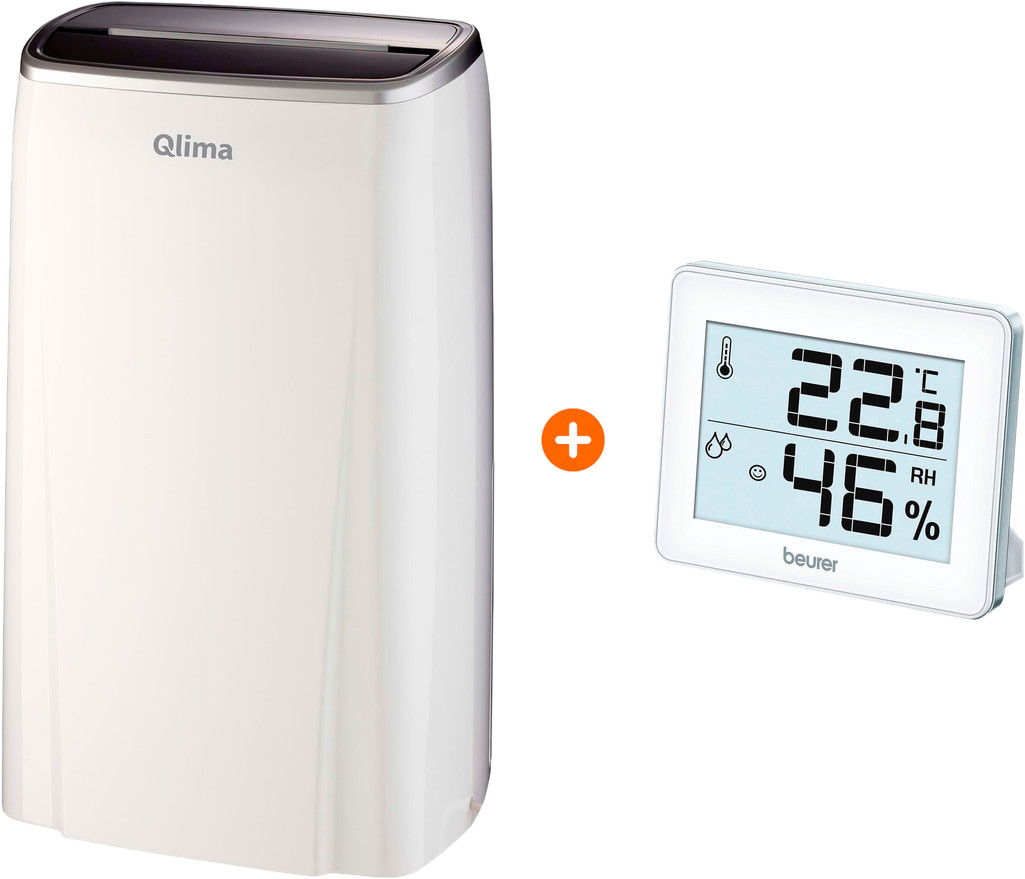
4. Eurom Dry Best 20 + Hygrometer – with the Eurom Drybest 20 + Hygrometer you’re always aware of the humidity in your home. This dehumidifier comes with a separate hygrometer to measure temperature and humidity. Useful, because you can immediately see how well the dehumidifier is working. The unit extracts up to 20 litres of moisture from rooms up to 24 square metres. That’s powerful enough to prevent fogged‑up windows and musty smells. Besides dehumidifying the room, you can also use this unit to dry laundry, thanks to a special laundry‑drying mode. The nice thing about this dehumidifier is that it’s on wheels, so you can easily move it to another room.
5. TROTEC Luchtontvochtiger TTK 70 E – has a maximum dehumidification capacity of 20 litres per day. Thanks to its space‑saving and attractive design, it’s ideal for dehumidifying smaller living spaces. The TTK 70 E features a humidistat‑controlled automatic mode. Various humidity levels can be selected via the digital display. When the set humidity is exceeded, the dehumidifier switches on automatically and turns off again once the desired level is reached. The connection for external condensate drainage (hose) allows the TTK 70 E to be used continuously.
6. De'Longhi DNS80 – this not only reduces humidity, it also improves air quality. This dehumidifier has an EPA filter to trap dust and bacteria in the air. In addition, it has an ionisation function that makes dust particles heavier so they fall to the floor. Handy, because then you only need to vacuum them up. To lower the humidity you choose one of the pre‑programmed modes. For example, you can select the laundry‑drying programme to dry your clothes faster. This dehumidifier is suitable for rooms up to 34 square metres and removes up to 20 litres of moisture per day.
7. Qlima D620 Luchtontvochtiger – stylishly designed and equipped with plenty of practical functions. It comes with a handy timer, 3‑layer filter, hygrometer and LCD display. What sets this model apart is its waterproof exterior, which means you can use it effortlessly in, for example, the bathroom or by a swimming pool.
8. Qlima DD208 – looking for a dehumidifier that performs well in cold rooms? Then the Qlima DD208 is for you. This dehumidifier works well at all temperatures, including in garages, basements and other chilly spaces. It extracts 8 litres of water from the air within 24 hours and is suitable for rooms up to 30 square metres. Is the water tank full? You’ll get a notification to empty it. Want the dehumidifier to run only at certain times? Then simply set a time using the timer.
9. Luchtontvochtiger en luchtreiniger Clean Air Optima 707 – for an optimal indoor climate, humidity is crucial. Medical specialists recommend an optimal humidity in enclosed spaces between 40 and 60% relative humidity. If the air indoors is too humid, your quality of life can be significantly affected by mould spores, allergens and respiratory issues.
10. TROTEC TTK 71 E luchtontvochtiger – has a maximum dehumidification capacity of 24 litres per day. Thanks to its space‑saving and attractive design, it’s ideal for dehumidifying smaller living rooms. With its timeless elegance, this dehumidifier blends seamlessly into any living or working environment. And it’s not just good‑looking – its technical features are impressive too. Modern dehumidification technology with electronic humidistat control and automatic defrosting, a flexible fan with two speeds, timer function and digital display with selectable target humidity ensure effective, energy‑efficient drying of living and office spaces or heated basements in fully automatic mode.
Write a reply
Related Posts
Stripchat complete guide 2026 – the ultimate handbook for new users, reviews, tips, safety & costs
1. What is Stripchat? Stripchat is an international live entertainment platform focused on interact ...
What’s the difference between the Dyson V8, Dyson V10 and Dyson V11 cordless vacuum?
Dyson has long been the king of the cordless vacuum cleaner, really ever since the DC16 was launched ...
Top 10 best vacuum cleaners of 2024
Everyone needs a vacuum cleaner at home, whether you live in a big or small place. A vacuum cleaner ...

Gardena Sileno models: City, Life and Sileno+ differences
Gardena was founded in 1961 in Ulm (Germany) and is part of Husqvarna Group. Since then, the brand h ...