The best speed pedelecs right now
What to look for, where to buy?
What is a speed pedelec?
Pedelec is the collective term for electrically powered bikes that provide pedal assistance. It refers to a bicycle that only delivers power when the rider is pressing the pedals. This is where the word pedelec comes from; referring to Pedal Electric Cycle. In this factsheet we distinguish between two types of electric bikes: the ‘regular’ electric bike and the relatively new ‘speed pedelec’. An electric bike stops providing pedal assistance at speeds above roughly 25 km/h, a speed pedelec stops providing assistance at speeds above 45 km/h. Legally, electric bikes are considered ‘normal’ bikes. Since 1 January 2017 a speed pedelec falls under the moped category.
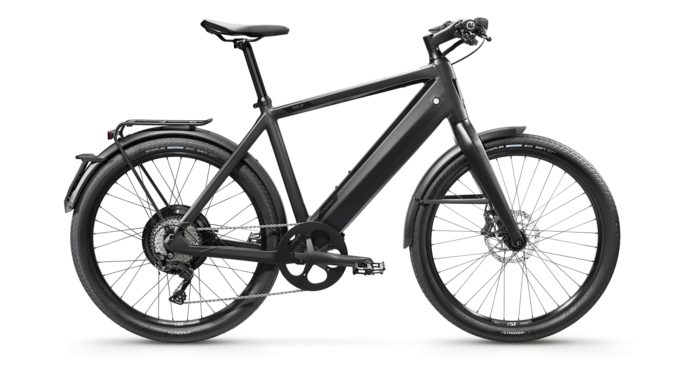
Pedelecs are sometimes incorrectly called e-bikes. According to European regulations (Bike Europe, 2014), e-bikes are not pedelecs (electric bikes with pedal assistance), but motorised two-wheelers with an electric motor on which riders do not need to pedal to move, but can go faster if they do pedal. Apart from the fact that they don’t have a combustion engine but an electric motor, these vehicles are light mopeds (maximum speed not higher than 25 km/h) or mopeds (faster than 25 km/h, but not faster than 45 km/h).
Where can I buy a speed pedelec?
Speedpedelec.com
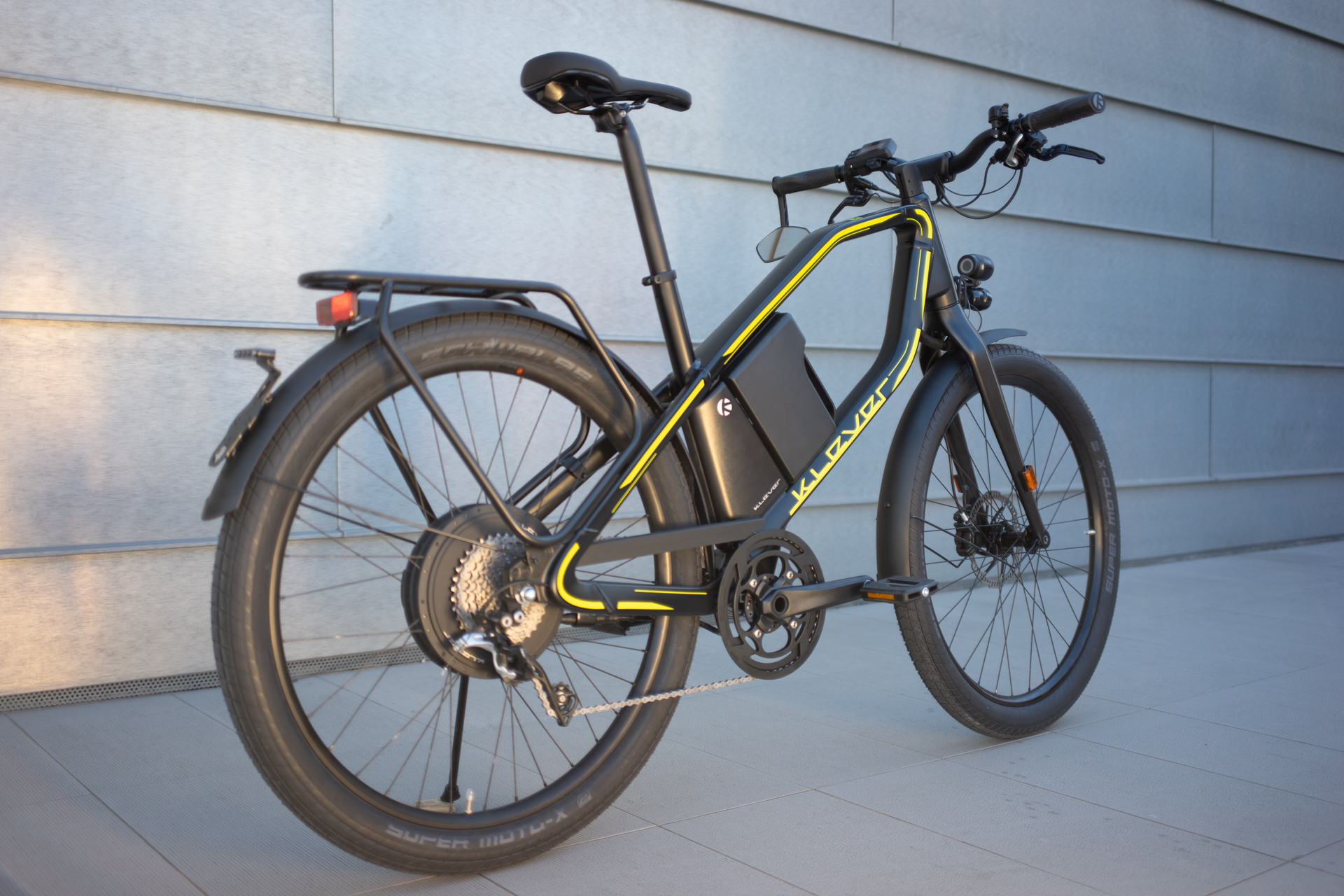
There are a few specialists that really are experts in speed pedelecs. The online bike shop speedpedelecs.com is one of them. They have a physical bike shop in Arnhem and you can also contact them online for advice or to buy a speed e-bike. They sell brands such as Kalkhoff, Kettler, Klever, MTB Cycletech, Stromer, Riese&Müller and Urban Arrow.

Bol.com
You’ll also find quite a wide range of speed pedelecs on bol.com from brands including Stromer, Fastida, Matrix and Raleigh. The nice thing about bol.com is that you know you’ll get excellent customer service, in most cases fast home delivery, and at least a 14-day return period with your money back.

Superfietsen.nl
On superfietsen.nl you’ll find a wide range of speed pedelecs from the brand Qwic. Prices range from € 3984,- to € 4884,-. Superfietsen.nl has a customer rating of 8.8 based on more than 1250 reviews. They are affiliated with the Webwinkel Keurmerk, which means that as a consumer you have extra rights, such as returns and support in case of any legal disputes.

Are speed pedelecs popular?
According to figures from BOVAG and RAI Vereniging (Kerncijfers tweewielers), in 2015 a total of 983,000 new bicycles were sold, including 276,000 electric bikes and 3,500 speed pedelecs. This means that more than one in four newly purchased bikes is a pedelec or speed pedelec. In 2014, Statistics Netherlands (CBS) estimated the number of electric bikes in the Netherlands at 1.4 million. Electric bikes are especially popular among older cyclists: in 2014, people aged 65 to 75 covered 34% of all their cycling kilometres on an electric bike. For cyclists aged 75 and older this was even 45%.
But use is also increasing among other groups. More and more commuters are using pedelecs, for example. Speed pedelecs have not been on the market that long and are mainly used by male commuters; two-thirds (65%) use the speed pedelec instead of the car. In June 2017 more than 10,000 speed pedelecs were registered with the RDW. Eighty-seven percent of owners are 40 years or older.
How safe is it to ride a speed pedelec?
It is not exactly known whether, and by how much, the risk of riding an electric bike is higher than that of riding a regular bike. Estimates vary widely. Riders on electric bikes are more seriously injured in crashes than riders on regular bicycles. That is the conclusion of the University Medical Center Groningen (UMCG), where the A&E department has been recording the type of bike involved since July 2014. When peers on a regular bike (not a racing bike) and on a pedelec (not a speed pedelec) in that database are compared, patients on electric bikes more often suffer serious and multiple injuries and more severe brain injuries than patients riding regular bikes.
According to an estimate by Fietsberaad (2013), the likelihood of a crash on an electric bike for cyclists younger than 60 does not appear to be higher than that of a crash on a regular bike. This risk does seem to be slightly higher for cyclists older than 60. From the age of 75, the likelihood of a crash is significantly higher for riders of electric bikes than for riders of regular bikes (Fietsberaad, 2013). There is also another estimate. Based on studies, the conclusion is that – corrected for gender and age – riders of electric bikes have almost twice the risk per kilometre travelled of being treated at A&E compared with road crash victims on regular bikes.
A higher crash risk with electric bikes can partly be attributed to the higher speed, and partly to the fact that electric bikes are relatively heavy compared to regular bikes. This more often causes (especially older) riders to struggle with mounting and accelerating, as well as slowing down and dismounting. In addition, the position of the auxiliary motor and battery on the bike also plays a role: the lower and more central the centre of gravity, the better the balance at low speeds. Another possible risk is the faster acceleration, which can surprise other road users. The higher speed also leads to more overtaking manoeuvres on bike paths. Most riders of electric bikes travel at an average speed of 17 km/h. On a regular bike, the average speed is 15 km/h. A speed pedelec travels at an average speed of 29 km/h on the bike path and 32 km/h on the carriageway of a 50 km/h road.
How fast does a speed pedelec go?
A speed pedelec provides pedal assistance up to a speed of 45 km/h. Different studies report different speeds actually ridden. A German study reported an average speed of 24 km/h. A Dutch study of 28 speed-pedelec riders (at the time classified as low-powered mopeds) found, under the most favourable conditions, a cruising speed of 35 km/h in rural areas and 33 km/h in built-up areas. No distinction could be made between speeds on the bike path or on the carriageway and between different external conditions. A comparison of three types of cyclists (riders on regular bikes, riders on pedelecs and speed-pedelec riders) before the law changed showed an average speed for speed-pedelec riders in urban areas of 27 km/h and 30 km/h in rural areas. A recent study into the behaviour of speed-pedelec riders after the law changed shows that on the carriageway (of 50 km/h roads with a separate bike path in built-up areas) they travelled at an average speed of 32 km/h. Where they, against the traffic rules, used the bike path, their average speed was 29 km/h.
Is wearing a helmet mandatory on a speed pedelec?
The Netherlands has no helmet requirement for pedelecs (pedal assistance up to 25 km/h), because these are considered ‘normal’ bikes. For speed pedelecs (pedal assistance up to 45 km/h), helmet use has been mandatory since 1 January 2017. According to European regulations, since then the speed pedelec has fallen within the moped category (until 1 January 2017 it was classified as a low-powered moped). The helmet for a speed pedelec can be a ‘regular’ moped helmet that complies with the ECE22.05 standard, or a helmet that complies with the NTA8776:2016 standard, which was specially developed for speed pedelecs.
Are you allowed on the road or do you have to use the bike path on a speed pedelec?
Research has not yet shown what the best position on the road is for speed pedelecs – the carriageway or the bike path – where there is no combined cycle/moped path. It is clear, however, that in terms of speed (and mass on the carriageway) the speed pedelec is not homogeneous with the rest of the traffic, either on the bike path or on the carriageway. On bike paths in built-up areas, the average speed of speed-pedelec riders is higher than that of other bike-path users: 29 km/h versus 21 km/h (including low-powered mopeds and measured during rush hours). Speed differences between different bike-path users can potentially lead to dangerous situations. In addition, bends and obstacles (such as kerbs or poles) can pose an extra risk for speed-pedelec riders at higher speeds.
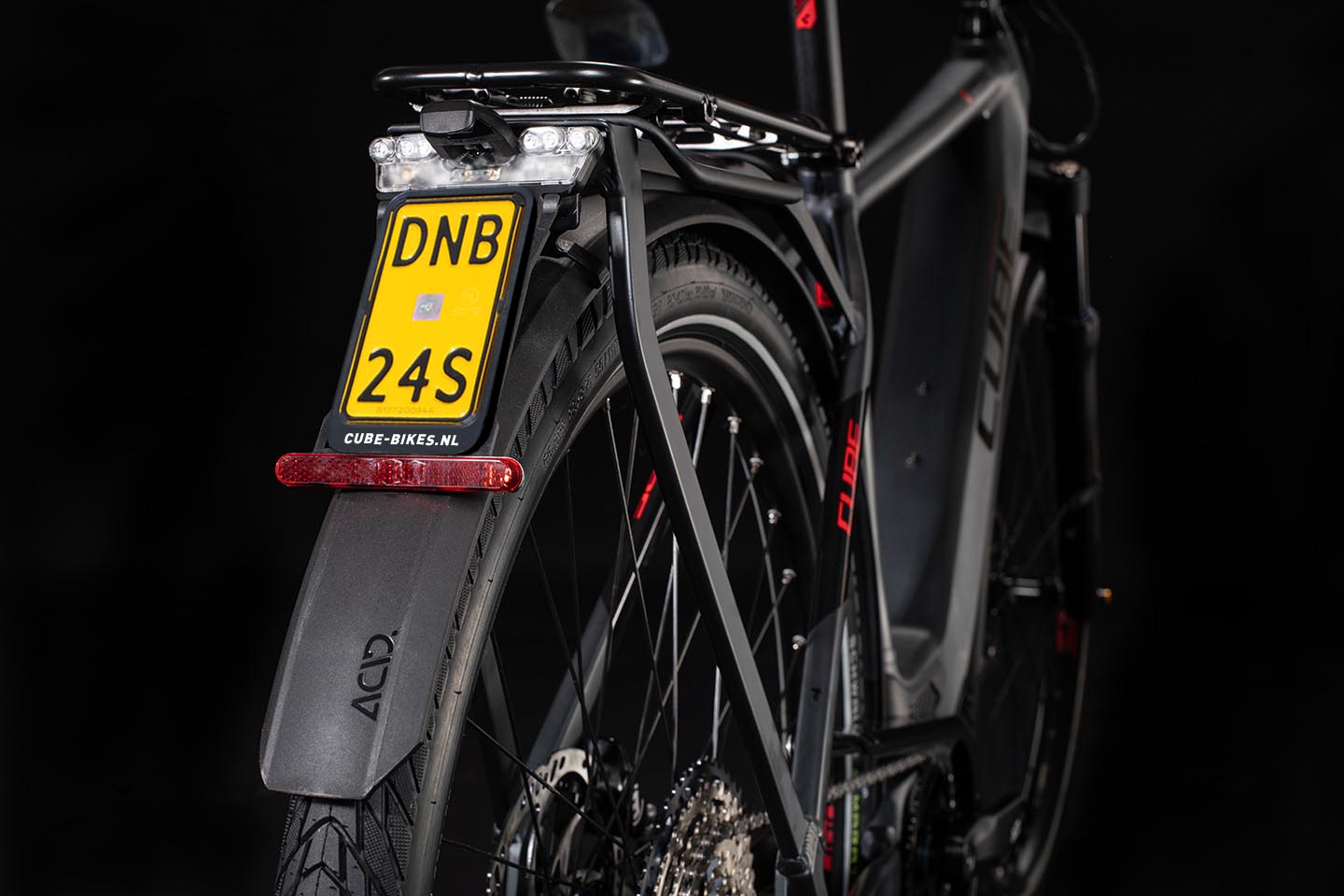
However, the average speed of speed-pedelec riders on the carriageway, 32 km/h, is lower than the 50 km/h speed limit. The difference compared with the actual speeds of other traffic is not clear. Speed differences between road users on the carriageway can lead to dangerous situations in which the speed-pedelec rider is extra vulnerable due to their limited mass and protection compared with car traffic. On average, once every 2 km there is a situation that indicates flow problems: drivers overtake speed-pedelec riders where it is not possible or permitted, drive very close behind the speed-pedelec rider, clearly brake or cut off the speed-pedelec rider. Some speed-pedelec riders therefore continue to use the bike path: for 23% of the distance where they were legally required to ride on the carriageway, they used the adjacent bike path instead.
How many kilometres can you ride on a speed pedelec? What is the battery range?
This all depends on the size of the battery. Some cheaper bikes only have a short range of less than 50 kilometres. However, most good-quality e-bikes have a range of 80 up to as much as 200 kilometres before they need to be recharged. Some even feature regenerative braking technology that can charge the battery while you’re riding. If the battery on your e-bike does run out, you can of course still use the bike. However, it will be harder to pedal because the extra weight of the battery means speed pedelecs are heavier than regular bikes.
Can you put a speed pedelec on a car bike rack?
Yes, that’s no problem. Most bike racks can carry around 60 kg. An average speed pedelec or electric bike weighs around 25 to 30 kg, so that’s fine. You can also read answers to this question on the Stromer forum.
We previously wrote about:
What are the best online shops for electric bikes?
Write a reply
Related Posts
Stripchat complete guide 2026 – the ultimate handbook for new users, reviews, tips, safety & costs
1. What is Stripchat? Stripchat is an international live entertainment platform focused on interact ...

What’s the difference between the Dyson V8, Dyson V10 and Dyson V11 cordless vacuum?
Dyson has long been the king of the cordless vacuum cleaner, really ever since the DC16 was launched ...

Top 10 best vacuum cleaners of 2024
Everyone needs a vacuum cleaner at home, whether you live in a big or small place. A vacuum cleaner ...

Gardena Sileno models: City, Life and Sileno+ differences
Gardena was founded in 1961 in Ulm (Germany) and is part of Husqvarna Group. Since then, the brand h ...